
Straight Answer
If your pipes are galvanized or cast iron, you are on borrowed time.
Older South Florida homes were built with pipe that rusts from the inside. You see it as brown water, weak pressure, or a slab leak that shows up as a warm spot on the floor. We camera the line first, then tell you whether it is a repair or a repipe.
Because we also hold the general license, we open the wall, do the work, and close it back up. You are not left hiring someone to patch drywall.
What We Handle
How It Goes
Four steps, no surprises.
Free diagnosis
We find the actual source instead of guessing at the symptom.
Written scope and price
Repair or repipe, priced both ways when both are honest options.
Permit and shutoff plan
We schedule around your water being off, and tell you for how long.
Work and patch-back
Tested, inspected, drywall closed and painted where we opened it.
Before & After
New fixtures are the easy part.
Before any of the finished side existed, the wall behind that vanity was repiped and the drains were re-run. That is the part nobody sees and the reason it is still dry in five years. Drag to compare.
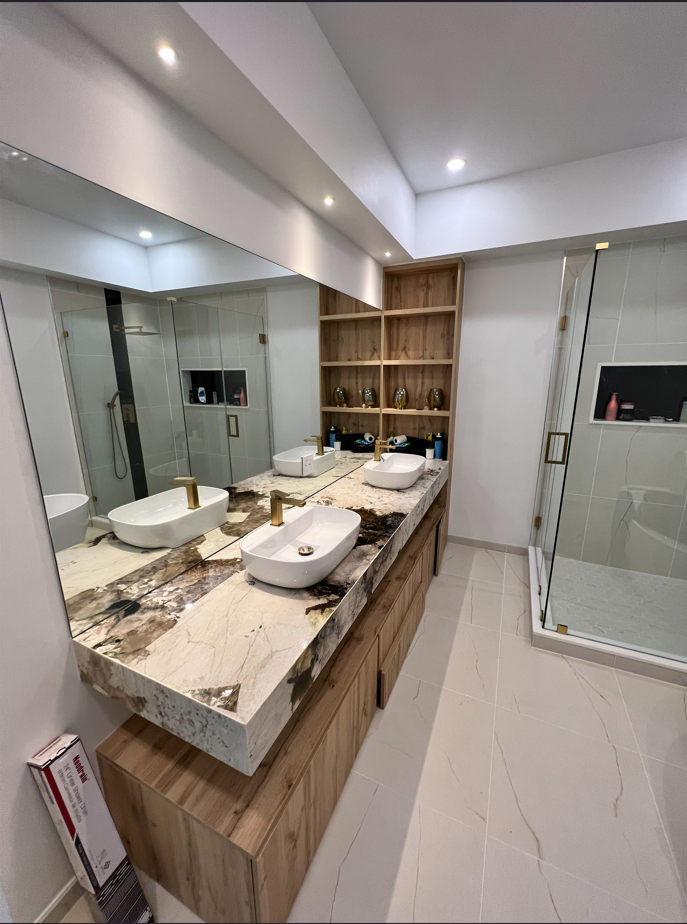
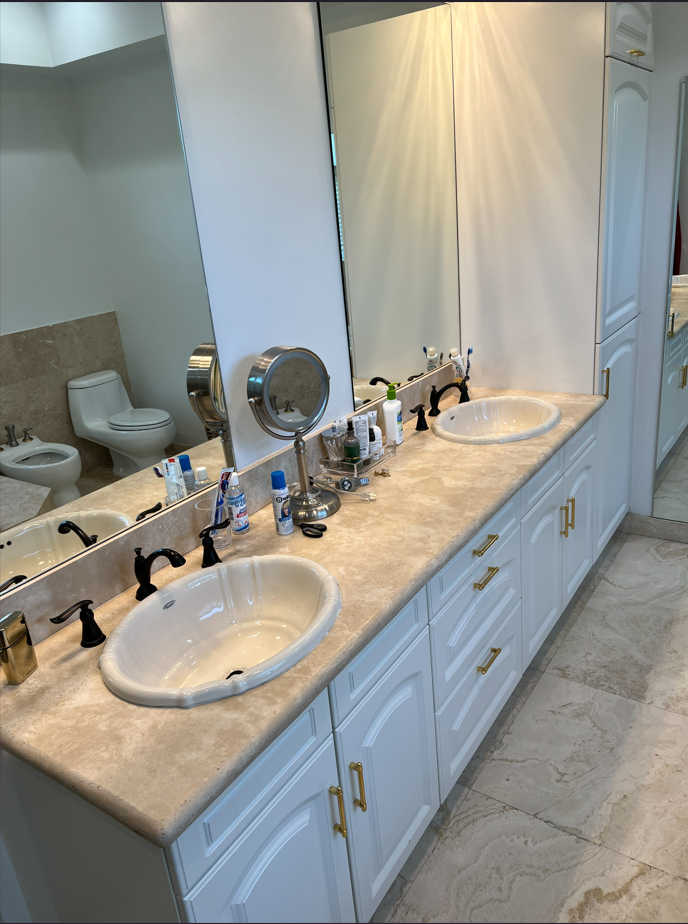
Every fixture moved.
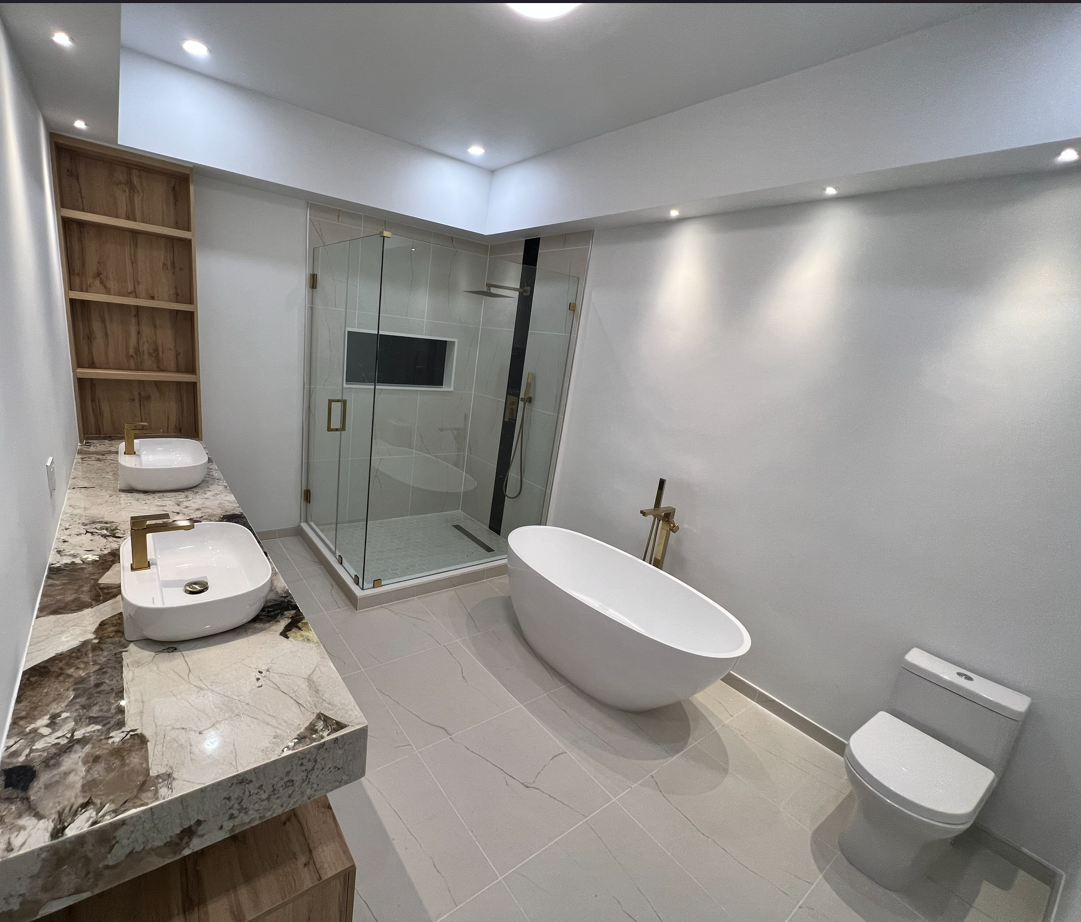
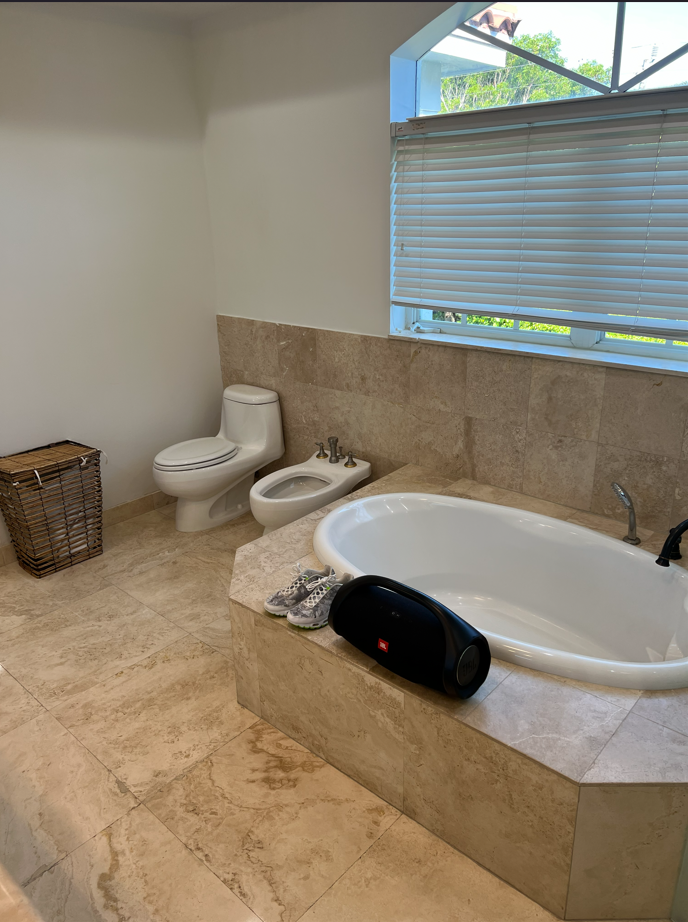
The old drop-in tub, toilet, and bidet came out and nothing went back in the same place. That means new supply lines, new drains, and a new vent, all inspected before the tile went down. Drag to compare.
Common Questions
Plumbing questions, answered.
How do I know if my Miami home needs a repipe?+
If your home still has galvanized steel or cast iron supply lines (common in houses built before the mid-1970s), you are on borrowed time. Brown or rusty water, weak pressure, and pinhole or slab leaks are the usual signs. We camera the lines first and tell you whether a repair or a full repipe is the honest call.
PEX or copper for a repipe?+
Both are good. PEX is flexible, faster to install, and costs less; copper is proven and extremely long-lived. We walk you through which fits your home and budget instead of pushing one.
How can I tell if I have a slab leak?+
Warm spots on the floor, the sound of running water when everything is off, an unexplained jump in your water bill, or new cracks in the slab. We use leak detection to pinpoint it before opening anything up.
How long does cast iron pipe last?+
Cast iron drain lines typically last about 50 years, and a lot of older Miami homes are at or past that. It rusts from the inside and starts to back up, so catching it early saves you a messy repair.
Do I need a permit to repipe or move plumbing?+
Yes. Repipes and any relocation of supply or drain lines are permitted and inspected. Because we also hold the general license, we open the wall, do the work, pass inspection, and close it back up.
How much does a whole-home repipe cost?+
It comes down to the size of the home, the number of bathrooms, whether we run PEX or copper, and how accessible the lines are. We camera the system and give you one written price, and where a repair is honestly an option we price it both ways. The only accurate number is a free diagnosis.
Will my insurance cover cast iron or polybutylene pipe replacement?+
Usually not on its own — most policies exclude gradual corrosion, so a failing cast iron line is typically out of pocket. Polybutylene is the opposite problem: many Florida insurers now refuse or non-renew coverage until it is replaced. We document the work so you can update your carrier.
How do I know if I have polybutylene pipes?+
Polybutylene is usually gray (sometimes blue) flexible pipe installed roughly between 1978 and 1995. It fails from the inside and is a common reason Florida carriers demand a repipe. If you are not sure, we identify it during a free diagnosis.
Other Trades