Straight Answer
The permit is usually the long part, not the building.
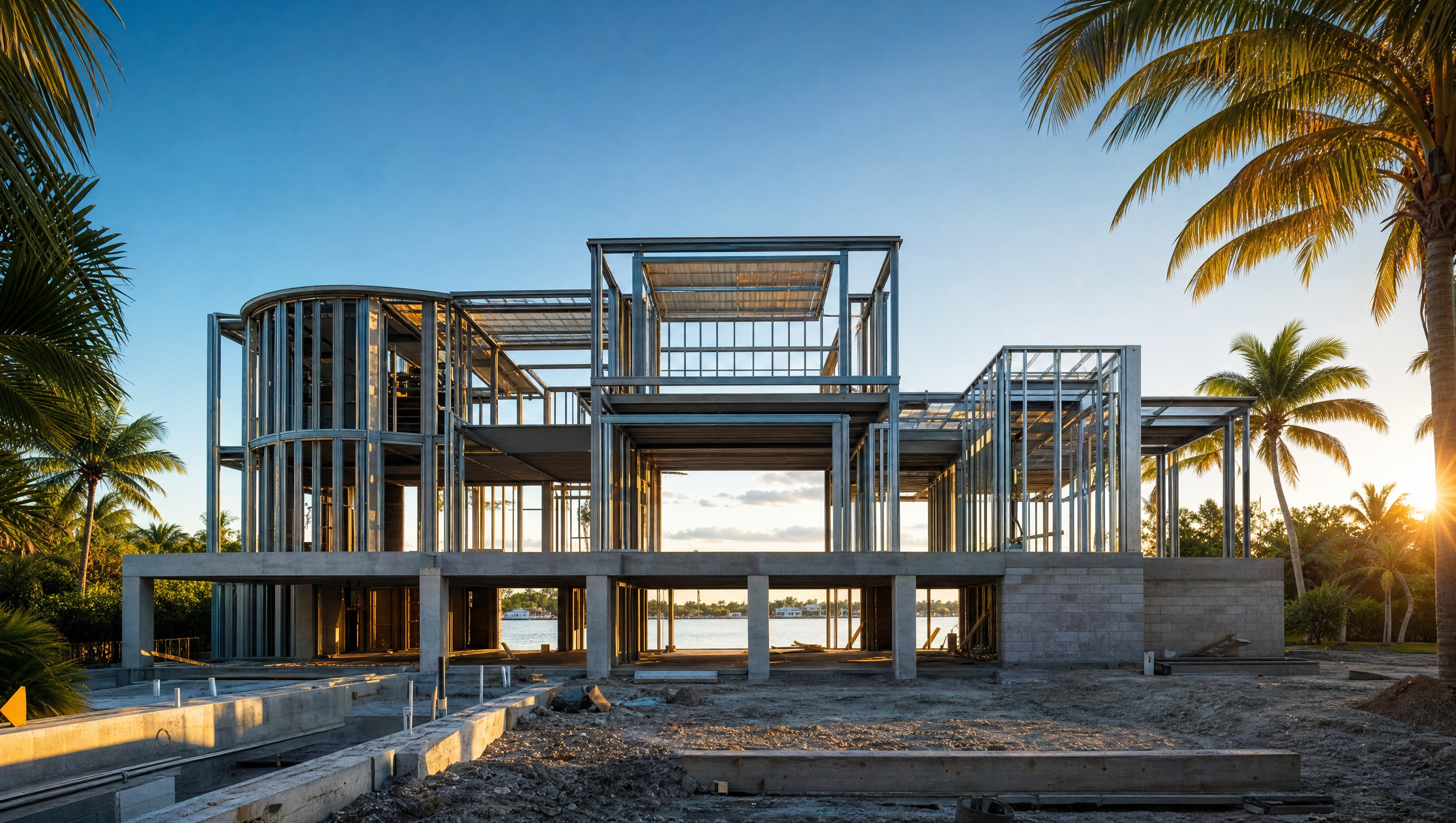
Additions, structural work, and new construction in South Florida live or die on plans, notices of commencement, and inspections. We run that paperwork ourselves and keep the trades moving behind it, because we are the trades.
One license covers the structure, the roof, the plumbing, and the mechanical. That is why our schedules hold when someone else is waiting on a sub.
What We Handle
How It Goes
Four steps, no surprises.
Site walk and scope
We look at what you have, what you want, and what the code will allow.
Plans and permit
Drawings, submittal, and the notice of commencement handled for you.
Build
Our own crews on structure, roof, plumbing, and mechanical, in sequence.
Inspections and closeout
Every inspection scheduled, passed, and documented.
Common Questions
General Construction questions, answered.
How long does a building permit take in Miami-Dade?+
It varies a lot with scope, from a few weeks for a simple job to a couple of months for a ground-up build or major addition. The permit is usually the long part, not the building, which is why we run that paperwork ourselves and keep the trades moving behind it.
Do I need a Notice of Commencement?+
For most construction jobs over $2,500, Florida law requires a recorded Notice of Commencement before work starts (a higher threshold applies to A/C work). We prepare and handle it for you.
Can one licensed contractor really run the whole build?+
Yes. We hold general, roofing, plumbing, and mechanical certifications, so the structure, the roof, the plumbing, and the A/C are all in-house under one license. That is why our schedules hold instead of stalling on a subcontractor.
What does building in the HVHZ change?+
Miami-Dade and Broward sit in the High-Velocity Hurricane Zone, so products and assemblies have to carry a Notice of Acceptance (NOA) and meet stricter wind standards. We build to that from the plans forward, so it passes inspection the first time.
How much does an addition or new build cost?+
It depends entirely on size, finishes, and site conditions, so any number without a walkthrough is a guess. We do a free site walk and give you one written, itemized price instead.
What happens if I build without a permit in Florida?+
Unpermitted work follows the house. It can trigger code-enforcement fines, complicate or block a sale, and give an insurer a reason to deny a claim, and the county can make you open finished work to inspect it after the fact. We permit everything so it is clean at resale.
Should I pull my own owner-builder permit?+
You can in Florida, but for anything beyond a small job it is risky — you take on the liability, the inspections, and the lien exposure yourself. For a full addition or new build, having a licensed contractor of record protects you. We are happy to explain where that line is for your project.
How do I check that a contractor is actually licensed?+
Look up the license number at MyFloridaLicense.com — it should be a state Certified license (as of July 2025, local "registered" licenses were phased out). Ours are Florida State Certified: general CGC1521744, roofing CCC1332548, plumbing CFC1433873, and mechanical CMC1251627.